

Find the Gap
Allow your audience to breathe

There’s a show my wife and I have watched for years - its called Location, Location, Location and it has been running for 26 years. It has a simple format of 2 presenters who help people in the UK try to find the ‘perfect’ home.
I wondered about the longevity of the show and I think it is because it is always unique despite the subject matter being the same. Every potential buyer sees property through their own experience and values, layering location to price, to walk in and do nothing or to bring their own palette and vision.
Every episode is unique but the same.
If you are a writer then you may appreciate the need to bring a sense of sameness to your audience yet also enough difference so that the audience doesn’t experience that uncanny feeling of deja vu.
Musicians have this issue, to create more of the same or to expand and experiment. Some musicians like David Bowie and Madonna made a career out of constantly changing while others end up on the retirement circuit still singing the same songs from 50 years ago.
Some writers I enjoy use similar themes and tones while chasing subjects that catch their interest or passions… some use grounding devices where they may reintroduce familiar topics like family, places, activities so that that part of the post has almost a musical refrain that reminds us we are on familiar ground even though the topic is unique.
I often mention coffee and today I wish to give a shout out to Neela 🌶️ who hugged me with multiple coffees - thanks Neela - you are uniquely the same good person I met 6 years ago.
How can we find the gap between being the same and being fresh?
In art I tend to follow similar subjects - romance, movement, people - I’ve tried doing flowers which as a subject are incredibly neutral - flowers are just lovely and art in themselves - they aren’t messy like people except for maybe the camellias in our garden when the petals fall.
People are complicated, and many artists prefer not to paint the faces of people - they may paint them looking away…
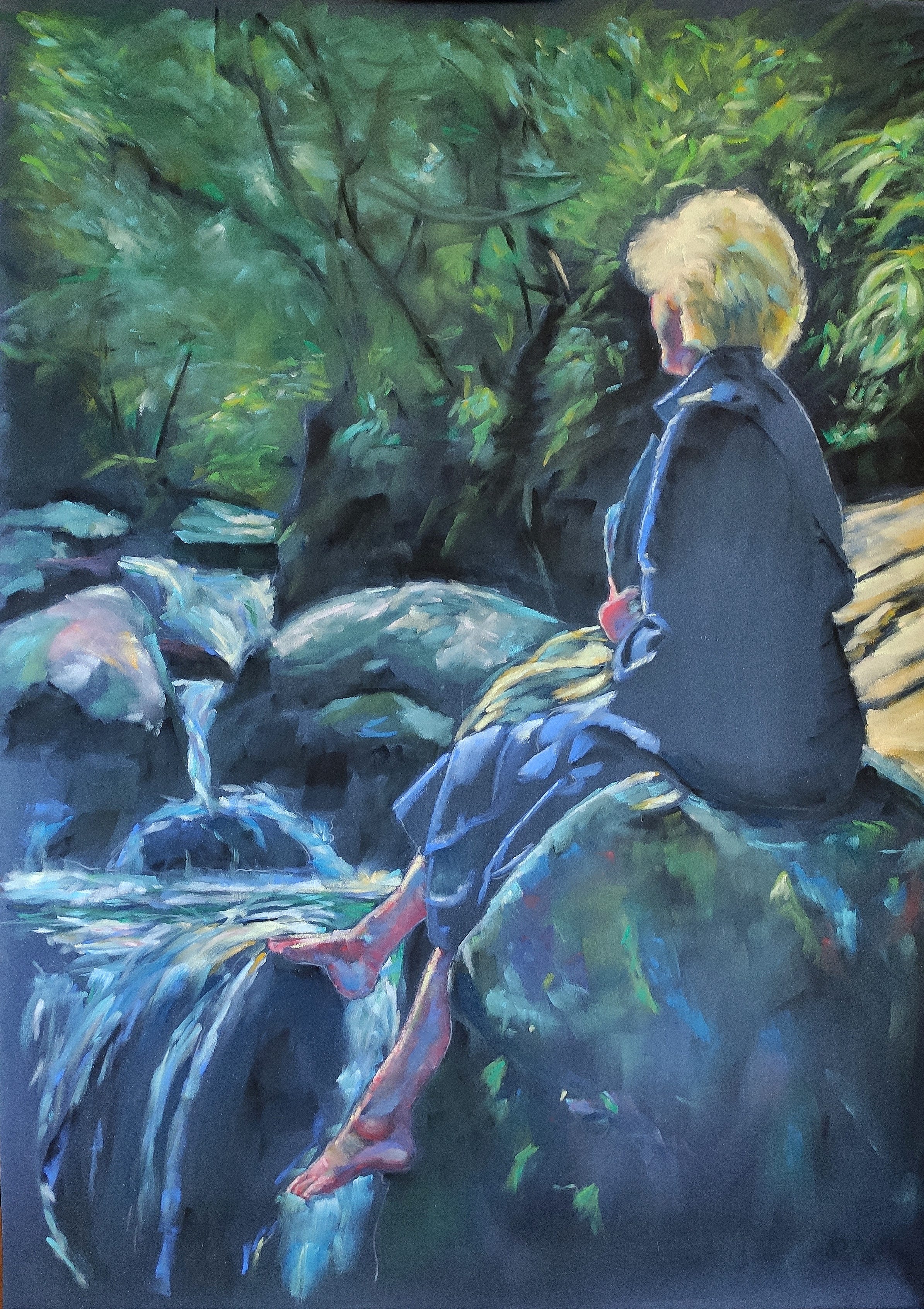
As I did in the above painting of my wife… actually I wanted to capture the halo in her hair and the light dancing on her skin - plus I was too terrified I wasn’t skilled enough to capture the impish look in her eyes. Still I love this painting and it takes pride of place in our home.
Anyway… many artists avoid faces as they are hard, you have to capture emotion and not just detail. Facial recognition is incredibly important to us, just look at the fuss some make about their LinkedIn profile pic, actually many of those are AI now and I’m not sure if those who have done that realize that facial recognition is critical in human communication. As one observer said we are hypercritical about faces… as any celebrity who has had facial work done knows.
Artists who don’t like painting faces can get away with painting one side of the face light and the other darker to give an impression of light and suggestion of features… the amazing thing is the audience seldom cares.
Now hang on you might say… on one hand I’ve said we are hypercritical about faces and now I’m saying we don’t care if they are just blobs.
The thing is most faces in crowds are blobs to us… our eyes are processing 10 million bits of information per second. Unless you are scanning a crowd for someone in particular it is easier for the brain to just fade everyone’s faces to blobs.
However when we are with people we know we are looking at their faces and reading their eye movements, their expressions, their mood… its not just their voice that matters it is their face.
This is important to consider when you create content, some creatives use photos or videos of themselves consistently so that their audience can create a better connection with them and their work. They ground their audience with familiarity even though the content might be fresh… or if the content is the same they use a fresh photo to make the post unique. I believe using the same photo with the same content = stale.
Can we get back to blobs though…
The great thing about art is that you don’t have to complete it. In fact art that is highly detailed can be exhausting for some audiences. They can appreciate the detail but it is too much information for the eyes to continually process. This is why impressionism was so ridiculed when it first arrived and then became so beloved. There was an audience of critics who demanded detail upon detail and then there was an audience who loved being able to relax and let their eyes breathe without a whalebone corset of convention buttoning up what they were expected to see.
Impressionism lets the audience find the gap…. and it lets their imagination fill it.
Here’s a painting I’ve started…
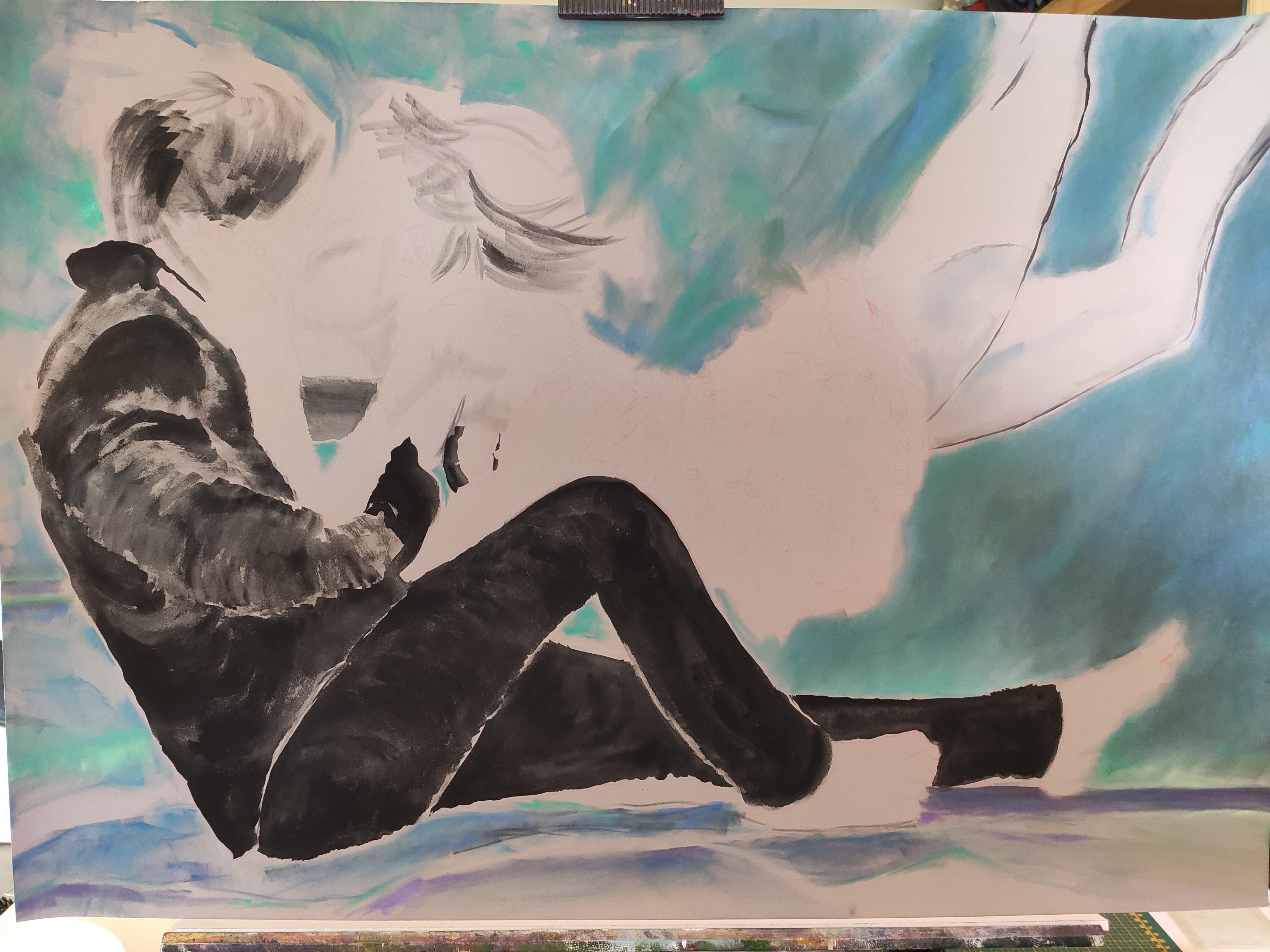
In this shot even though the couples faces aren’t even outlined you are likely to find the gap and your own mind will fill it - surely they are kissing…
Now if I fill in some more of the painting…
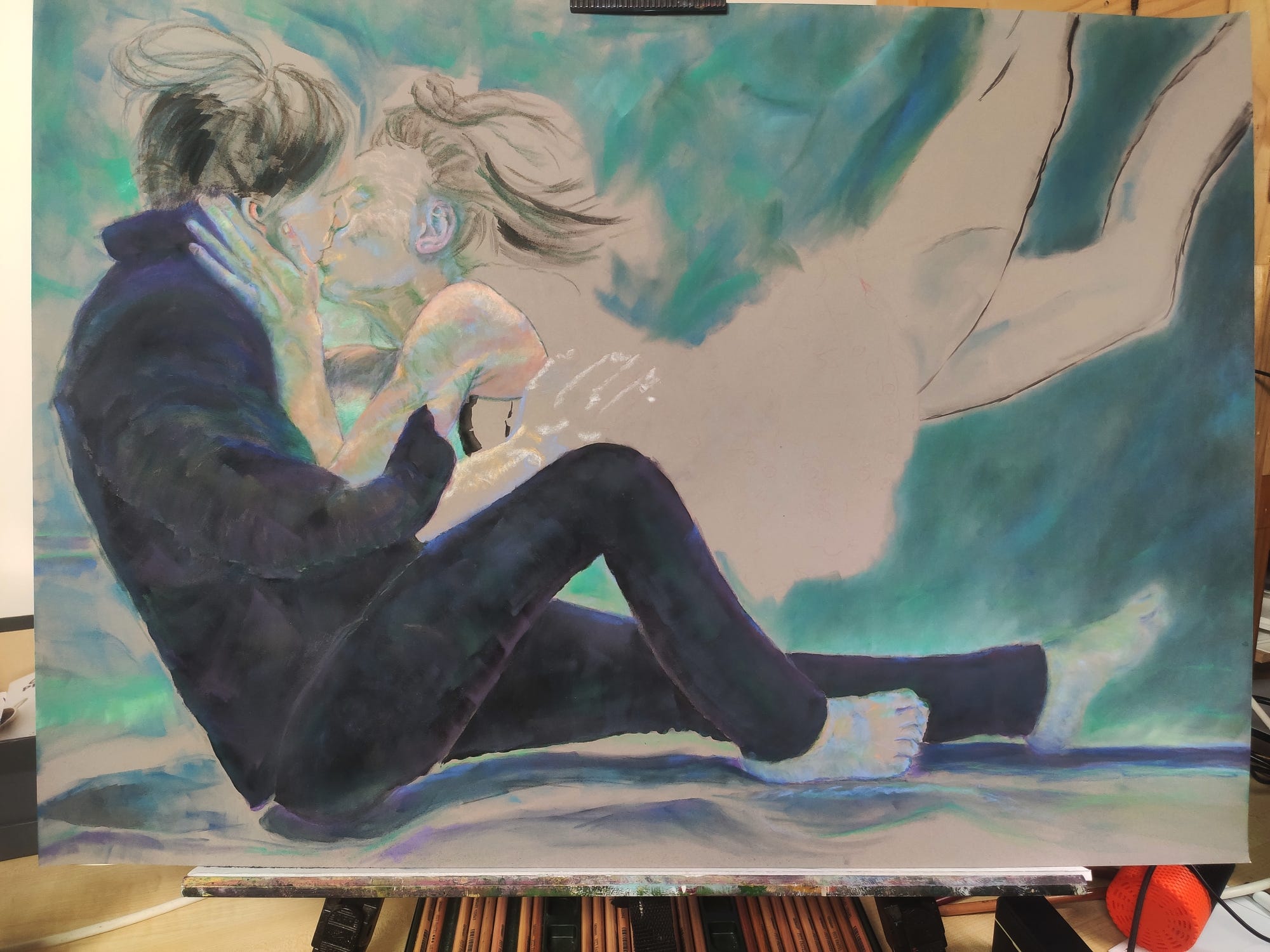
Still there is a gap… but now the emotion begins to seep out of the picture - the caress of her hand… the leaning into the moment… even though it is so unfinished you can sense the story… already I'm thinking of leaving the paper to show through on his face and not fill that gap… so that a future audience can find it.
And so we return to writing…
Does everything need to be set like a perfect table?
In the show Location, location, location there are buyers who see the gap and their own minds fill in what could be.
When we write do we let our audiences breathe or do put our foot in their backs as we tighten the strings of their corsets so that they are constrained to see everything as we see it?
There was an article I read a few months back that when I got to the end I felt like I’d fallen off the page and had to back up and re read the last few paragraphs… it left me wanting more… there was a gap.
One of the annoying ways human speech is evolving is due to video editing… reels and YouTube are full of people who never pause… they have no gaps. This is not our brains wish to work… we need time to process… which is why coffee was invented…
You see coffee provides a gap… a chance to take a pause and think before the next sentence or to reflect on the last… it lets us breathe and find the gap.
In summary… fresh bread is better than stale unless you have a toaster.
Most of us draw upon our own lived experience when it comes to writing to keep an audience coming back we need to talk about what attracted them in the first place but also provide something new.
In our house both my wife and I take turns moving the furniture around when the other is out of the house. It’s the same furniture in a different configuration and it feels fresh… sometimes the story is not about the location but the configuration.
My art will continue to be of dancers, romance, emotion in motion until I feel stale and I suspect that will be when I have mastered it - that’s going to be a long way off so if you want flowers I’m sorry… I do occasionally paint coffee though…
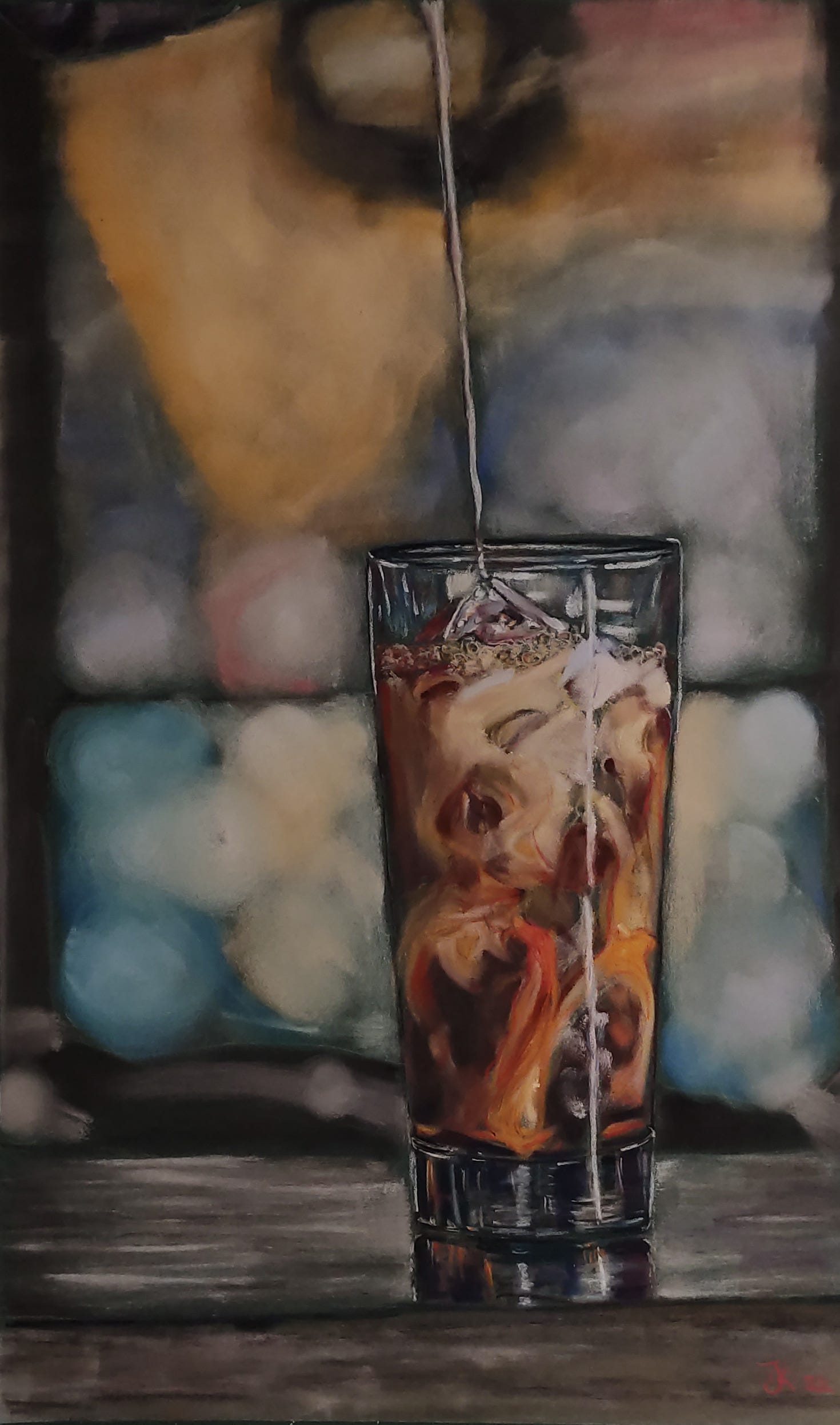
Wishing you all a great week ahead…
Are you writing about painting, or painting about writing, or both about living? The gap invites our participation, I think.
Dude, so jealous....how you filled that gap with those faces kissing. Beautiful.